Decoding Repair. Restoring Function.

Regeneration research has shown that structure can return after injury. Whether function returns with it is a different question and largely unanswered.

About

In the Varholick Lab, we study the whole animal, not just its parts; its natural physiology, its behavior, and how it actually uses the tissues it regenerates. We focus on species that can do what humans cannot: heal skin without scars, regrow peripheral nerves, and restore lost tissue. But we ask the harder question, not just whether regeneration occurs, but whether it restores function, and how we would know.

We are a team of curious problem-solvers. Whether you are an undergraduate looking for your first research experience or a collaborator with a new perspective, we believe that good science is a team sport. Join us.

black and white photo of Dr. Varholick pipetting solutions in the lab

Our Approach

From nature's best healers to therapies that restore function.

01

Know the Animal

Study the natural physiology and behavior of highly regenerative species — before injury, not just after.

02

Measure the Recovery

Measure the quality of structural recovery and ask whether it predicts the return of function.

03

Build the Therapy

Translate what regenerative animals do well into therapies for peripheral nerve recovery in humans.

Research

01

The Biology of Species That Heal Without Scarring

Before we can understand recovery, we have to understand the animal. We study the natural physiology and behavior of highly regenerative species. That is, how they develop, move, and sense their environment before any injury occurs. You cannot define restoration without first defining the target.

Explore our models →
02

Regeneration, Adaptation, or Both?

After injury, two things happen simultaneously: tissue regenerates, and the animal adapts by rewiring its nervous system, redistributing sensation, changing how it moves, and compensating for the injury. Both can restore function. But they are not the same thing. We measure the quality of regenerated tissue and ask whether structural recovery actually predicts the return of function. This is the central question driving our lab.

See the behavior link →
03

Closing the Gap in Human Nerve Repair

Peripheral nerve injuries affect over 20 million Americans. Even when nerves regrow, functional recovery is often incomplete because regenerating the structure does not guarantee restoring the function. By studying how regenerative animals achieve high-quality recovery, we aim to identify what is missing from human repair and develop therapies that close that gap.

View our vision →

Recent Publications

Histological image from the publications showing a cross section through the muzzle after whisker pad removal

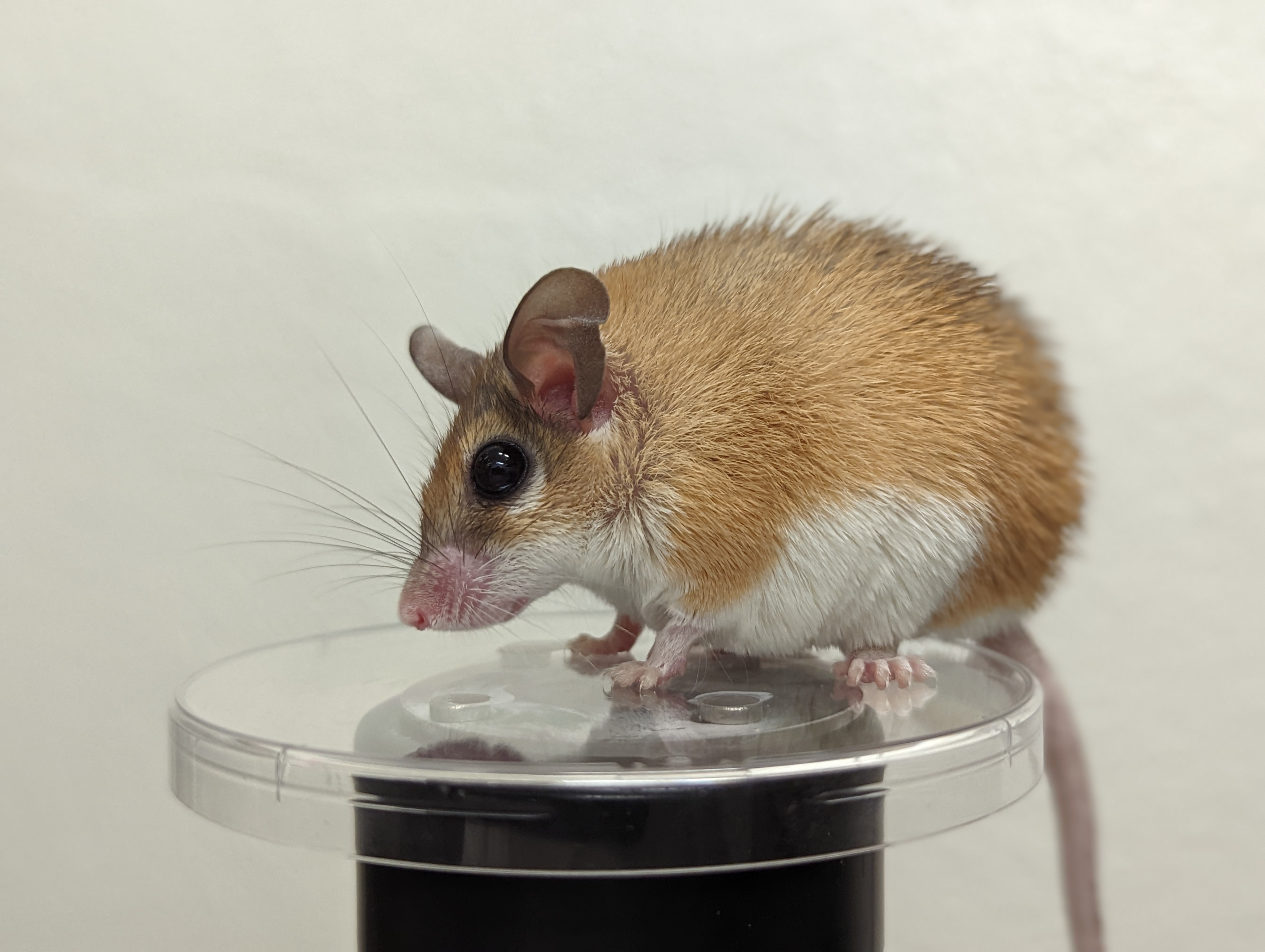
Spiny mice (Acomys) regenerate wounded whisker pad skin with whisker follicles, muscles, and targeted innervation.

Varholick, J.A., *Kondapaneni, R., Maden, M. (2025). npj Regenerative Medicine, 10:28

This is the first study to demonstrate that spiny mice can regenerate their whisker follicles and the associated structures after removal. Starting a new model system for studying cutaneous nerve regeneration.

PDF, DOI Link
Network diagram of how structural recovery, the environment, and neuroplasticity all interact to affect behavioral recovery. Each has a bidirectional effect with one another and a reciprocal interaction with themselves.

Integrating regenerative biology with developmental psychobiology to understand behavioral recovery.

Varholick, J.A. (2025). Developmental Dynamics Early View

This is a theory paper establishing the intimate connection of behavior and neuroplasticity with tissue regeneration.

PDF, DOI Link

Latest News & Updates

Latest

February 2026

High School Researcher Selected for Regeneron ISEF 2026

Rachel (Jaehyeon) Lee, a high school student from Walton High School in Marietta, GA, who worked in our lab over winter break, has been selected to present her research on planarian regeneration at Regeneron ISEF 2026 in Phoenix, Arizona. Congratulations, Rachel!

January 2026

Recruiting MS Student for Fall 2026

The lab has open positions for research projects on tissue regeneration, behavioral neuroscience, and physiology in highly regenerative rodents, salamanders, and planarians. Students will have opportunities to incorporate laboratory, bioinformatic, and possibly field methods and work collaboratively with other lab members. Learn More

December 2025

Lab Awarded internal grants; PrePI and Mentor Protege

The Varholick Lab was awarded two internal grants. A $19k grant for "Unravelling synaptic resilience: neurobiological mechanisms of enhanced learning and memory in Acomys cahirinus." In collaboration with Dr. Vishnu Suppiramanian and Dr. Erica Holliday. The other is a $3.5k award to study "Exploring neuroanatomy and sensory innervation in polymorphic two-lined salamanders" with Dr. Todd Pierson and students Kellyn Gilligan and Ito Osayi.

Get in Touch

We're always open to collaborations, inquiries, and new talent. Reach out to us!

Visit Us

Science Building, Room 360
Kennesaw State University
Dept. of Ecology, Evolution, and Organismal Biology
Kennesaw, Georgia

View on Map